
Death
This reflection on death is taken from 'The Philosopher's Beach Book'.
(It concerns the exitential impications of thinking about your own death. Coping with the death of others is a very different matter. The on LOSS has been added at the foot of the article.)

Most people are dead. Death is the norm, it is life that is the rare exception. And it gives us relatively little comfort to recognise that we will be entirely recycled (whether we choose burial or cremation). We know that the atoms of which we are made were fashioned five billion years ago in the centre of an exploding star and that they will go on for billions of years more. We appreciate that we are but their temporary arrangement into human form.
But we can’t actually identify with any of that; we are ourselves only in so far as we are conscious, and the question ‘Who were you?’ – a question that we will never live to be asked or able to answer – hovers over the boundary of our experienced sense of self.
It was the question implied by all myths of a final judgement, with threats of hell or the promised rewards of heaven; as we are required to give an account of ourselves before some higher power. ‘Who were you?’ is the question that gives conventional religion its power. It is the question about ultimate value and purpose and about whether something as temporary as a human being can have any meaning within the greater scheme of things.
Epicurus (341-270BCE) dismissed concern about death, since ‘when we are, death has not come and when death has come, we are not’, a view echoed in the 20th century by Ludwig Wittgenstein.
That may not entirely produce the tranquil acceptance of death that Epicurus sought, since I would judge the final moments of life equally to be feared. Even if you believe that the self survives death in some way, you are still never going to be in a position to be asked ‘Who were you?’ since if you survive death you presumably continue to be. As a matter of logic rather than religious vision, survival of death is self-contradictory.
Yet many, including some great thinkers, have tried to minimise that perspective. In the 19th century, the ethical philosopher Henry Sidgwick became one of the co-founders of the Society for Psychical Research, whose presidents included William James and Henri Bergson, both substantial philosophers. There was a widespread hope that science would somehow help to deify humankind, offering a promised immortality. There was a fascination, that continues in some parts to this day, in attempting to show that the dead still live – even if their communications from beyond the grave appear rather limited and banal.
Yet surely that approach is a form of escapism. It is essential to argue that a finite human life has a valuable and permanent place within the overall scheme of things (in other words, from an ‘eternal’ perspective), if we are to commit to values that transcend the individual. We are parts of a whole, and are valued as such. But that is not the same as trying to claim that, as individuals, we continue to live (or have the potential to live again, if our mummified or deep-frozen remains can be resuscitated). To argue that death is somehow unreal, or temporary, is to go against the very nature of living things. We are compounded, made up of endless cells that live, grow and die. We are a process that had a beginning in conception and will have an ending. The whole nature of living things depends upon death and change. We are not the same as we pass through life; how much less likely that we can become a living fossil after death?
But whether or not – for reasons religious or intellectual – you believe in life after death, consider for a moment the perspective on this present life that death offers. We are bounded by death and defined by our own finitude; we live knowing that we will die. It is a thought from which, for most of the time, we will do anything to escape. Yet a holiday, like sex, offers a ‘little death’, or at least a temporary death (a holiday limbo between who you were and who you want to be), a non-orgasmic letting-go of our ordinary life, allowing ourselves to luxuriate in the present moment. And, hopefully, after the holiday, we can go back and start life afresh, or at least refreshed in our post-holiday reincarnation.
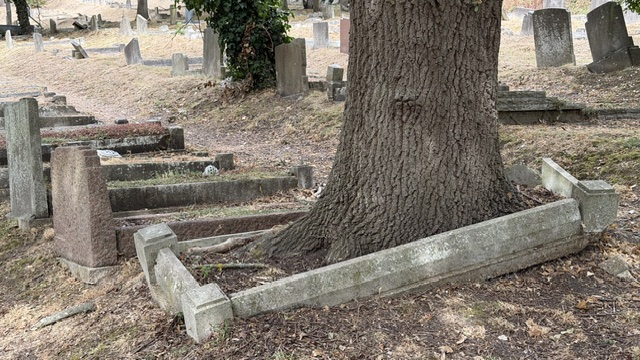
As we stand back (or sit back, or relax back) on our ‘beach’ and look at life, the perspective of our own death has a great deal to offer. Here, for example, are three thoughts from the Meditations of Marcus Aurelius, who managed to combine philosophy with ruling the Roman Empire in the 2nd century:
The first is that death is a great leveller:
‘In death, Alexander of Macedon’s end differed no whit from his stable boy’s. Either both were received into the same generative principle of the universe, or both alike were dispersed into atoms.’ Mediation 24, book 6
(That said, it is assumed that the stable boy did not die over the course of a couple of days from what might have been poison, following a long night of drinking and partying, interspersed with baths and a chance to take a nap. The manner of one’s dying may vary according to rank and circumstances, even if the end result does not.)
The second is that death is essentially a letting go from the constant drive of life:
‘Death: a release from impressions of sense, from twitchings of appetite, from excursions of thought, and from service to the flesh.’ Mediation 28, book 6
(But one might also say that, albeit to a lesser extent, of old age.)
And the last puts death in the context of the constant process of change in life:
‘Observe… how transient and trivial is all mortal life; yesterday a drop of semen, tomorrow a handful of spice or ashes. Spend therefore these fleeting moments on earth as Nature would have you spend them, and then go to your rest with a good grace, as an olive falls in its season, with a blessing for the earth that bore it and a thanksgiving to the tree that gave it life.’
from Meditation 48, book 4
Why is it that ‘I did it my way’ is such an empowering line, however it is crooned into the microphone? Simply because the emphasis is on the ‘my’. Unfortunately, few of us will be able to say that with integrity and our dying breath. All through life we tend to ask ‘Who am I?’ and, by implication ‘What may I become?’ The future is the open zone of hope that the limitations of the past may be overcome. There comes a point when we no longer have that future. We start to ask ‘Why was I?’, attempting to make some sense of life as a rounded whole.
Sartre famously declared that ‘Hell is other people’ towards the end of his play ‘No Exit’, about three people who find themselves together in hell, spared conventional means of torture but allowed to torment one another. It highlighted a more general feature of his thinking, namely that we are always afraid of being defined by others, limited by them. We rebel against being pigeon-holed. We know we are more than people see of us at this minute; we know they misunderstand our intentions and fail to appreciate our thoughts. Yet we can hope to change, to explain ourselves better, to defy expectations. But at death, the attempt to escape the opinion of others ceases; we have no more chance to defend ourselves. We cannot stand up and contradict what is said at our funeral oration. We are stuck with what we are seen to have been by others. Death is the perspective we most fear; in the face of it we are defenceless, our record fixed for others to interpret.
The mistreated dead cry out for vengeance – a theme in much literature and art, from ancient legends to modern films. Life has a value that is not always appreciated: we want it to be; we want them to have the last word. We want them, as we want ourselves, to be understood and for the truth to be known. We sense that we are not just what others see; that our story, from birth to death, is not all that can be said about us; that we aspired to be something more, that life was an inevitable compromise that we secretly regret. Perhaps the greatest fear of death, is the fear of believing that one has not fully lived, however long or short one’s life.
Death makes life manageable. If we were immortal there would be too many choices, too many careers to follow, too long to give us an excuse for not perfecting everything we do. Given an infinite period of time, we would all equal one another, all study everything, all engage in everything – gradually tending towards a bland perfection. It is death, finitude, the recognition that we have one life to choose, live through and take responsibility for, that gives us character. Death is the perspective that gives our life its individual meaning.
John Donne’s famous lines ‘Ask not for whom the bell tolls, it tolls for thee’ encapsulate the existential approach to death, namely that the fact of death places a question mark over all our lives. And the reason, as he presents it is that ‘no man is an island’, we are part of a common humanity, bounded by death. Anyone’s death, but particularly those close to us, forces us to consider our own life and mortality. We are who we are because of the fact of death.
There are accounts of philosophers being ‘philosophical’ in the face of death, of whom Socrates and David Hume are perhaps the best known, and Bertrand Russell spoke of death in terms of a river finally flowing out into the sea, which is fair enough as an image, but only for those dying gently in old age. But the problem is that the events that end in death may also be random, untimely and merciless. In the traumatic situation of those facing the certainty of imminent death, some seek to make some final gesture that sums up their sense of self – as we heard in heart-wrenching calls from the mobile phones of those trapped in the upper floors on the morning of 9/11. Equally, the condemned may react strangely to the threat of death, perhaps wanting to die well, to maintain their self-respect to the last. Faced with death, some see only the ridiculousness of the living – all ideas explored in a wonderful short story by Sartre – The Wall – about the reactions of three men condemned to death in the Spanish Civil War.
So that’s it: not what I will become, but what I have done and what I am now; the final perspective.
LOSS
It's one thing to contemplate one's own death, and the perspective it gives on life, quite another to exprerience the death of someone dear to you. The issue with that is LOSS, the aching void that is left in life with the ending of the live of someone with whom one has a relationsip - whether that relationship is good or bad. Death of someone with whom one had failed to behave well, may bring guilt to add to a residual sense of loss. But where the person is loved, the loss becomes all the more painful and long-lasting. It is an experience of absense, or something precious being removed, of the colour being drained from life. Of an aching and a longing for a presence that is no longer there.
Dealing with loss requires more than this note. I have added it here simply as a reminder that the pain of death comes from the death of others, rather than the inevitability of our own demise. It has been well explored by others and is beyond any glib philosophical comment or generalisation.