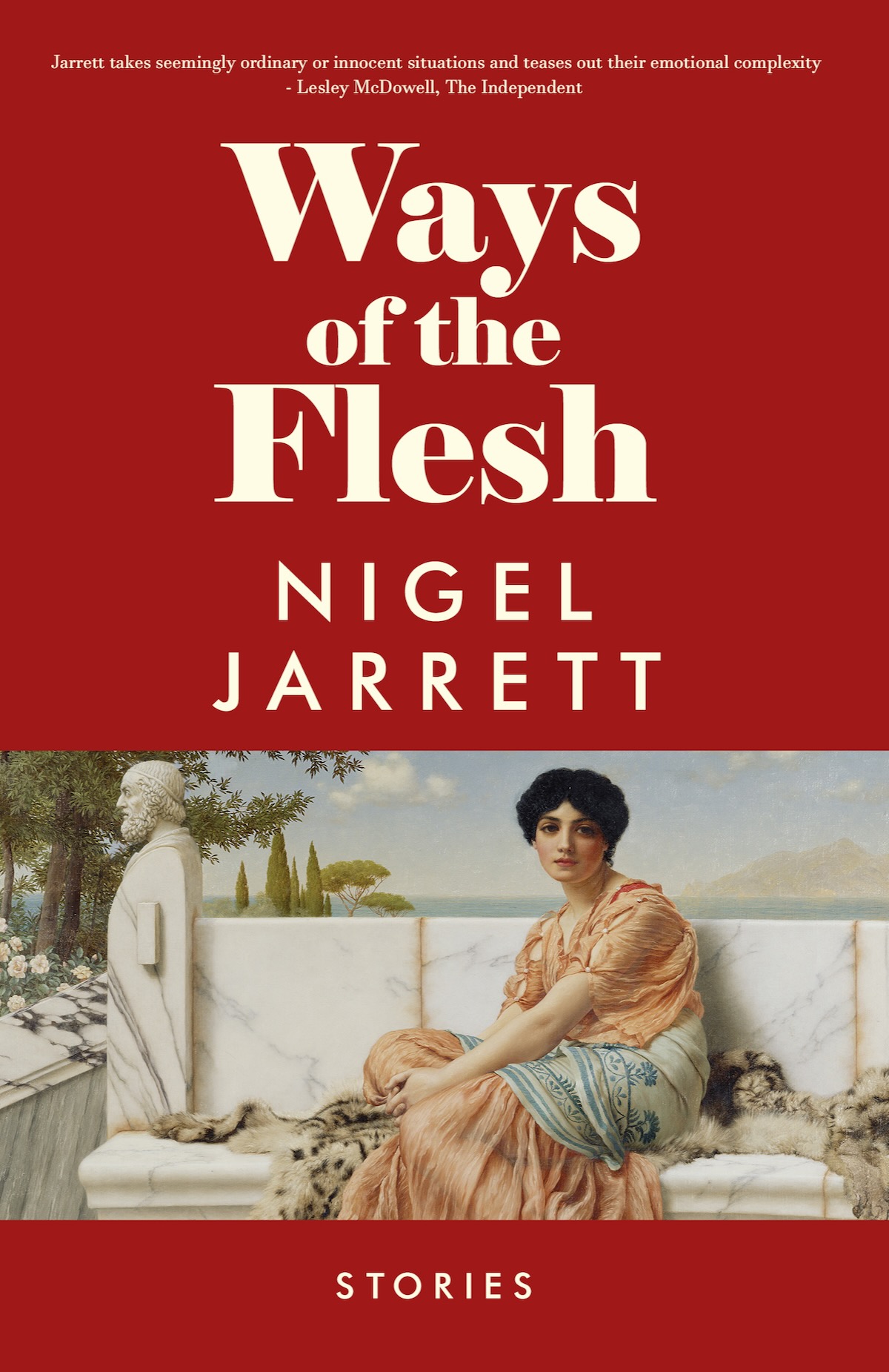
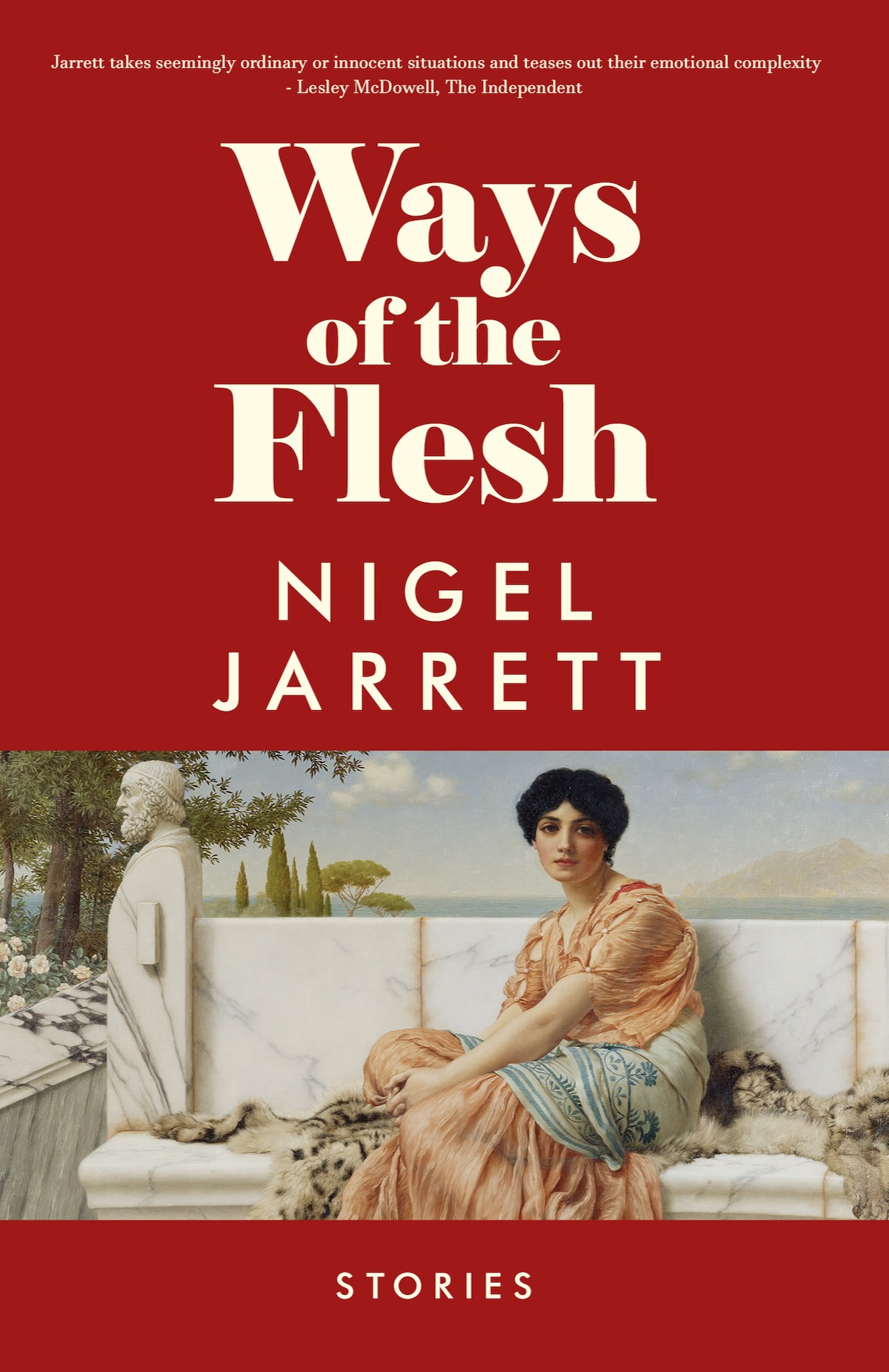
 Ways of the Flesh
The American poet William Carlos Williams, who was also a GP in New Jersey, once asked a selection of writers how often they estimated that death appeared in their work. The count was high.
Prize-winning writer Nigel Jarrett, in his fifth collection of stories, explores the various paths taken towards our final and universal destination via the pleasures, the pains, and the vulnerabilities of life.
The secret web-browsing of a wife and mother; marital duplicity in Barcelona; the mysterious disappearance of an explorer; a startling theory about the moments after we die; a society woman's disappointment with a portrait of her painted by a famous artist; not one but two stories about the scattering of human ashes; a retired professor's chronicling of his physical decline; and, finally, a woman's tragic mis-deed teased from the fastnesses of cyberspace – in these sharp, shepherded fictions, Jarrett again ranges widely across time, place, and history to confront what we so often postpone and to unite us in our common fate.
ISBN 9781906385972
The book is available on Amazon, or by ordering through bookshops, quoting the title and ISBN.
For more information about the author, click here.
And for the link to a review by Jon Gower in NATION.CYMRU click here.
And here is a review on Amazon by Nicholas Whitehead...
The Story is Just the Beginning
I watched a YouTube video of a man testing ammunition. He fired an armour-piercing bullet into a quarter-inch-thick steel plate. Predictably, the steel plate was knocked off its perch and had a hole in it. But then we saw the event from a different angle, close-up and in slow motion. The bullet cruised towards the plate. At the point of impact, the steel melted, erupting into a quicksilver corona for the bullet to pass through. The steel hardened into a snapshot of that moment. The steel plate recorded the violence but only the video showed us the beauty.
Reading a Nigel Jarrett short story is like watching that video. Something that is over in the blink of an eye - a glance or a wisecrack at a dinner party - is viewed in close-up. In slow motion. This is what makes Jarrett worth reading. It’s that unflinching gaze on the interactions between the characters he’s created.
The stories have very clear beginnings: ‘A woman phoned today claiming to know my brother’s whereabouts.’ It’s a classic opening to a short story. You’re hooked; you want to follow wherever the story leads. But don’t go asking what happens next or how it will end. Once you’ve stepped into one of Jarrett’s imaginary worlds, the story becomes almost incidental. Normal situations become weird and fascinating. Or, in another story, a dystopian future is somehow recognisable and familiar.
At the end of every story, there is something to ponder. In A Kafka Story, for instance, it’s the interplay between fiction and reality. We see characters metamorphose from one state to the other. Between those two poles is the life of the story. We see characters change polarity before our eyes. Close-up and in slow motion.